
Dietitian Blog | Dec 15 2025
A dietitian’s guide to concentrated powdered infant formula
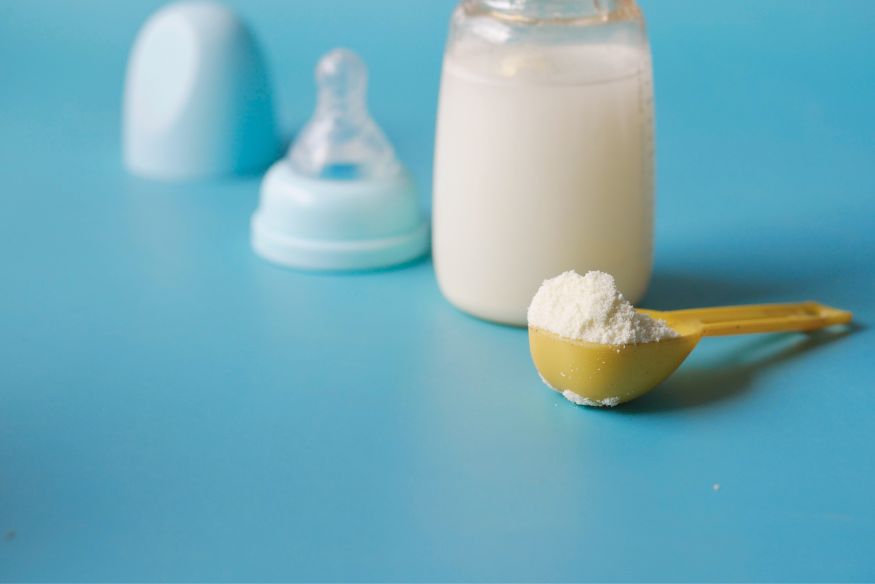
In pediatric settings, providing education to caregivers on mixing their baby’s formula is something a registered dietitian is certain to encounter. While the advantages of exclusive breastfeeding for infants aged 0 to 6 months are well established, it is pertinent that dietitians be aware that this only accounts for a fraction of the infants they will encounter in practice.
Most recent data from the Centers for Disease Control and Prevention in 2019 shows 83% of newborns had received at least some amount of breast milk. By 6 months of age, this fell to 56% with even lower numbers outside of the United States (US). This indicates that some infants rely on formula for at least some portion of their nutritional needs.
Nutritional concerns
Given that formula may be the sole source of a baby’s nutrition during the first 6 months of their life, all brands that are sold in the US must meet the nutritional adequacy requirements set forth by the Food and Drug Administration. When conducting a nutritional assessment on formula-fed infants, it is critical to ask detailed questions to the caregiver(s) about both formula preparation as well as the feeds themselves.
As the nutrition experts, it is within a dietitian’s scope of practice to assess home feeding regimens, how bottles are being prepared, and if the infant is expressing feeding cues to assure safe and appropriate feeding practices. Additionally, assessing if they have used other formula brands in the past can support obtaining a thorough nutrition history. Proper nutrition is critical at this age to meet rapid growth and developmental milestones.
If an infant is receiving improperly mixed formula, the primary concern is nutritional imbalances, which can lead to a number of other conditions. Over-diluting can cause malnutrition, hyponatremia, water intoxication, and improper brain function. Under-diluting may lead to an infant being overfed, resulting in weight gain or excess gas and bloating. Over time, the infant could become dehydrated due to less water being provided by the formula.
What are concentrated infant formulas?
Standard infant formulas are typically 20 calories per ounce (kcal/oz) and are often suitable for healthy babies. Infants in the clinical setting may have increased energy needs, making it critical that they receive adequate calories through a properly mixed, higher-calorie formula. These are referred to as “concentrated” formulas. Some formula brands include concentrated mixing instructions on the container; however, since some may not, it becomes critical for a dietitian to be well-versed in how to perform these calculations manually.
At this early stage of life, it may not be recommended for caregivers to increase the number or volume of feeds in order to meet this demand. It is likely that their small bodies will not tolerate higher volumes of formula, which could lead to vomiting, diarrhea, and gastrointestinal distress. Instead, it may be more practical to increase the concentration, thereby increasing calories without significantly increasing volume. Concentrating formula should be done at the direction of the healthcare team and under medical supervision to ensure tolerance is established and for consideration of potential renal solute load.
Here are some examples of concentrations that infant formulas may be mixed to:
- 22 kcal/oz
- 24 kcal/oz
- 27 kcal/oz
- 30 kcal/oz
*Note: Infant formulas are given in kcals/oz. Remember that 1 oz is approximately 29.57 mL.
In order to determine a feeding regimen, calorie needs must be estimated. Once this is determined, these calories can be used to calculate how much formula to give the infant per feeding, each day.

Concentrating formula steps
It is important to note that the method discussed here only applies to powdered formulas and should not be used for liquid concentrate or ready-to-feed formulas. Additionally, increasing the concentration of infant formulas should be done in a stepwise fashion. Often, an incremental increase of 2-4 kcal/oz is chosen depending on the clinical scenario. After advancing to a higher concentration, it is generally advised to wait 48-72 hours to monitor tolerance before advancing further.
Before starting, the following must be determined for the chosen brand of formula:
- Calories per scoop of formula
- Calories per gram of formula
- Grams per scoop of formula
- Displacement in milliliters per gram (mL/g)
- Number of scoops of formula per bottle
The following is for small-batch preparation. Consider these steps for the calculation of the water needed for the formula recipe and total bottle volume:
| Step | Calculation |
|---|---|
| Step 1 |
Multiply the number of scoops by the grams of powder per scoop. This will provide the total grams of powder. |
| Step 2 |
Multiply the total grams and the calories per gram. This will provide the total calories provided by the formula. |
| Step 3 |
Divide the total calories provided by the formula by the calories per mL (kcal/mL) of the desired caloric density. Do not divide by kcal/oz! Kcal/mL can be determined by dividing the kcal/oz by 29.57 mL. This will provide the total bottle volume in mL. |
| Step 4 |
Multiply the total grams calculated in Step 1 by the displacement factor. If the exact displacement is unknown for the given formula, a standard of 0.7 mL per gram may be used. This will provide the amount of water being displaced by the formula in mL. |
| Step 5 |
Subtract the mL of water being displaced by the final volume calculated in Step 3. This provides the volume of water needed for this formula recipe in mL. |
| Step 6 |
Convert this volume of water needed back to ounces by dividing by 29.57 mL/ounce. Round up or down to the nearest ½ ounce as needed. This provides the total volume of water to be used for this formula recipe in ounces. |
Here is an example of concentrating an infant formula:
A dietitian plans to concentrate Enfamil® NeuroPro® Infant Formula (20 kcal/oz) to 22 kcal/oz with the provision of 2 scoops of formula per bottle.
| Step | Calculation |
|---|---|
| Step 1 | 2 scoops × 8.8 grams of powder per scoop = 17.6 total grams of formula |
| Step 2 | 17.6 grams × 5.1 kcal/gram of formula = 89.8 total kcal |
| Step 3 | 89.8 total kcal ÷ 0.74 kcal/mL = 121.4 mL per bottle |
| Step 4 | 17.6 grams × 0.77 mL/g = 13.6 mL of water displaced by the formula |
| Step 5 | 121.4 mL – 13.6 mL = 107.8 mL of water to be used for this formula recipe |
| Step 6 | 107.8 mL ÷ 29.57 mL/oz = 3.6 ounces. This may be rounded down to 3.5 oz per the dietitian’s discretion. |
To check your work, simply calculate the number of kcal from your scoops of formula and divide this by the final volume per bottle in mL (identified in step 3). Then convert this back to oz. This should match the desired kcal/oz.
Example:
89.8 kcal ÷ 121.4 mL = 0.74 kcal/mL
0.74 kcal/mL x 29.57 mL/oz = 21.9 kcal/oz
Mixing instructions
Infant formula mixing instructions may vary slightly depending on the formula or institution. With standard infant formulas, it is good practice to encourage the caregiver(s) to refer to the manufacturer’s product information for instructions on preparing that specific infant formula. While the ratio of formula scoops to ounces of water will differ with a concentrated formula, the general instructions for safe preparation and storage practices will still apply.
Putting it all together
In conclusion, infants are of particular nutritional importance in consideration of their rapid growth, neurological development, and long-term health outcomes. Infants may present with elevated nutritional needs for a variety of reasons, all of which must be carefully considered when evaluating their feeding regimens.
Concentrating infant formulas simply serves as a tool to optimize nutrition and an application that any dietitian who finds themselves working in pediatric populations should be knowledgeable of. Because mixing is a crucial step where errors can easily occur, it is important to thoroughly educate caregivers to ensure a healthy start in life.
Dietitians On Demand is a nationwide staffing and recruiting company for registered dietitians, specializing in short-term, temporary, and permanent-hire positions in acute care, long-term care, and food service. We’re dedicated to dietitians and helping them enhance their practice and excel in the workplace. Check out our job openings, request your coverage, or visit our store today!
References:
Rosenkranz R, Gonzalez-Alvarez A, Acosta C, et al. Variability and error in measurement of infant formula powder and water: An experimental study. Front Nutr. 2024. https://doi.org/10.3389/fnut.2024.1385496
Infant Formula. U.S. Food and Drug Administration. Updated May 13, 2025. Accessed September 24, 2025. https://www.fda.gov/food/resources-you-food/infant-formula
The Dangers of Watering Down Infant Formula. UNC National Research Institute. Updated May 23. 2022. Accessed September 24, 2025. https://uncnri.org/2022/05/23/the-dangers-of-watering-down-infant-formula/
Corkins KG, Lee L. Infant Formulas and Complementary Feeding. ASPEN Pediatric Nutrition Support Core Curriculum. 3rd ed. ASPEN; 2025: 215-229.
Centers for Disease Control. Updated December 19, 2024. Accessed September 26, 2025. https://www.cdc.gov/infant-toddler-nutrition/formula-feeding/preparation-and-storage.html
Anderson D, et al. Pediatric Nutrition Reference Guide. 12th ed. Texas Children’s Hospital; 2019.
Sapsford A. Powdered Formula Recipe Calculation Template. Pediatric Nutrition Practice Group of the Academy of Nutrition and Dietetics. Updated 2021.
Wilkinson T, Scott EK, Carroll AE. Mixed Message on Formula Mixing. Pediatrics. 2019;143(6). https://doi.org/10.1542/peds.2018-2525
Enfamil® NeuroPro® Infant. Mead Johnson Nutrition for Healthcare Professionals website. Updated 2021. Accessed November 26, 2025. https://hcp.meadjohnson.com/s/product/a4R4J000000PpQdUAK/enfamil-neuropro-infant

About Kaitlyn Batten and Kristen Herceg
Kaitlyn Batten recently completed her dietetic internship at VCU Health in Richmond, VA. Prior to her internship, she worked in various nutrition settings, such as WIC, where she counseled caregivers on a variety of nutrition topics. Through this, as well as 300 supervised practice hours in pediatric clinical nutrition, she has developed a strong passion for ensuring kids have the healthiest start in life.
Kristen Herceg, MS, RD, LD, CNSC joined the Dietitians On Demand team as the Clinical Education Manager in 2025. She has experience in a variety of settings, such as long-term care, behavioral health, and public health-focused research. However, the majority of her years as an RD have been spent in a large, academic hospital focused on nutrition support and critical care. Throughout her career, she has most enjoyed opportunities to teach various audiences and precept dietetic interns. Outside of work, Kristen loves traveling, reading, and swimming.
Who we are
Dietitians On Demand is the nationwide leader in providing dietitians with jobs they love. If flexibility, competitive pay, a full benefits package, free CPEUs each month and a team dedicated to dietitians sound good to you, apply to our positions today.


